
Dogwalker Revisisted

I reread Arthur Bradford’s first story collection this week. Slim book called Dogwalker.
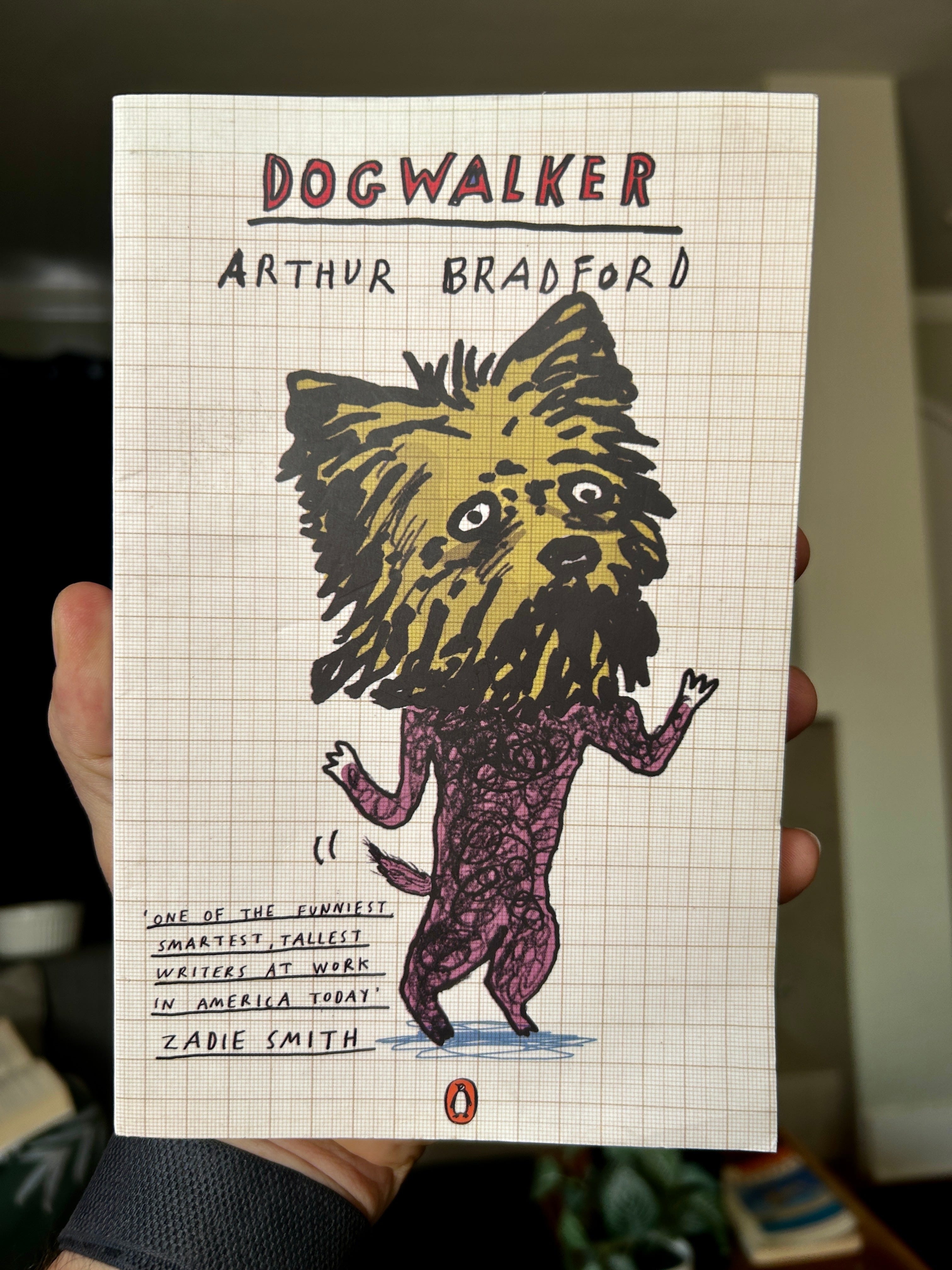
12 stories, some only a few pages, but a couple long boys too. I’ve reread it before. It’s a comfort book for me. I’ll read it and then give away my copy and buy another and repeat. This is something I do with books that really get inside my skull. To date, I’ve probably purchased and given away a dozen copies of Dogwalker, but I’ve also done the same to Winesburg, Ohio and most recently, Mike Nagel’s Duplex.
For whatever reason, the used bookstore in Old Town Goleta where I bought my current copy of Dogwalker is a UK Penguin edition. (I also picked up a UK edition of Pynchon’s Vineland in the same trip, it makes me wonder if they didn’t acquire a big batch of lit titles as part of an estate sale).
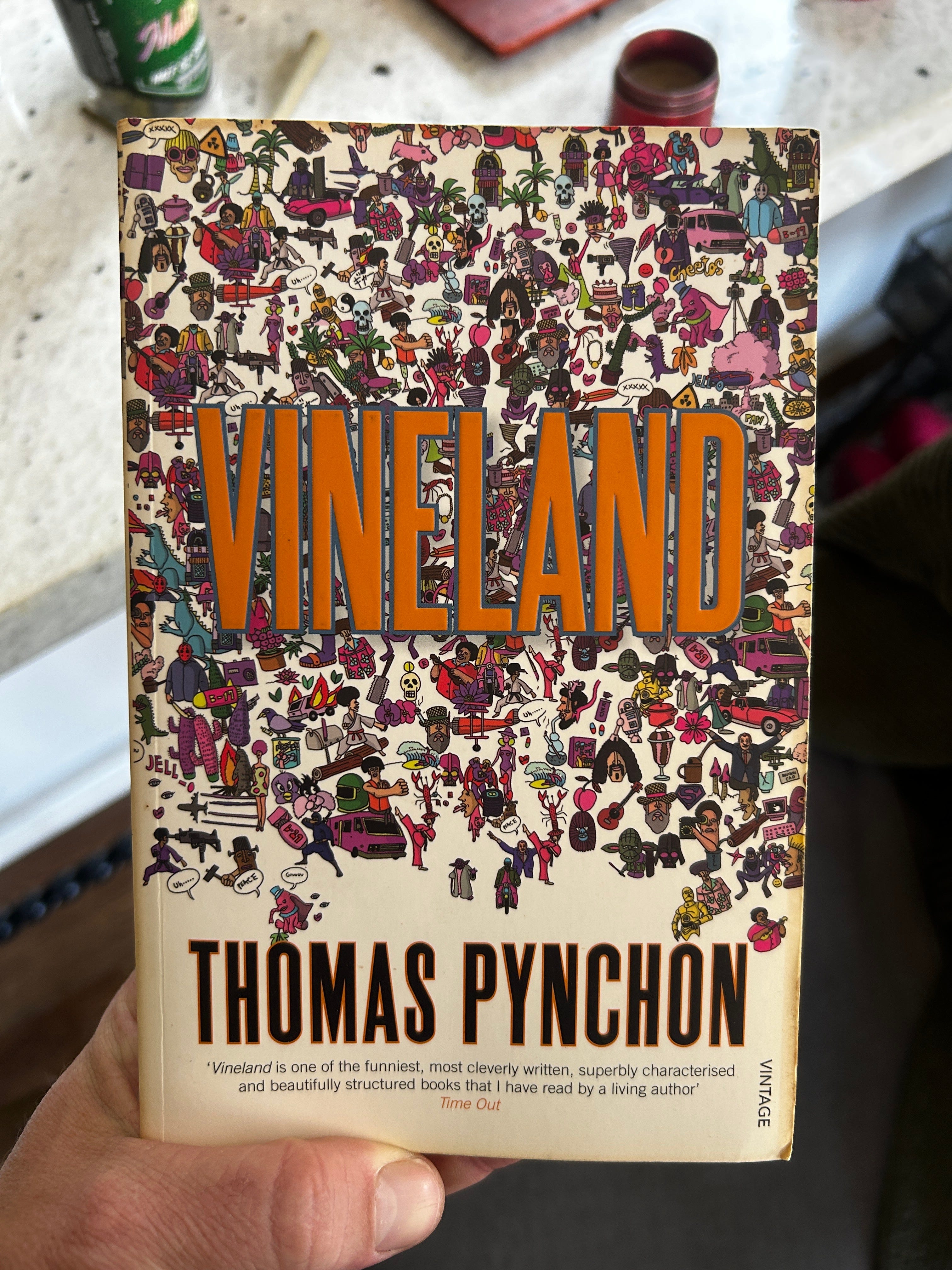
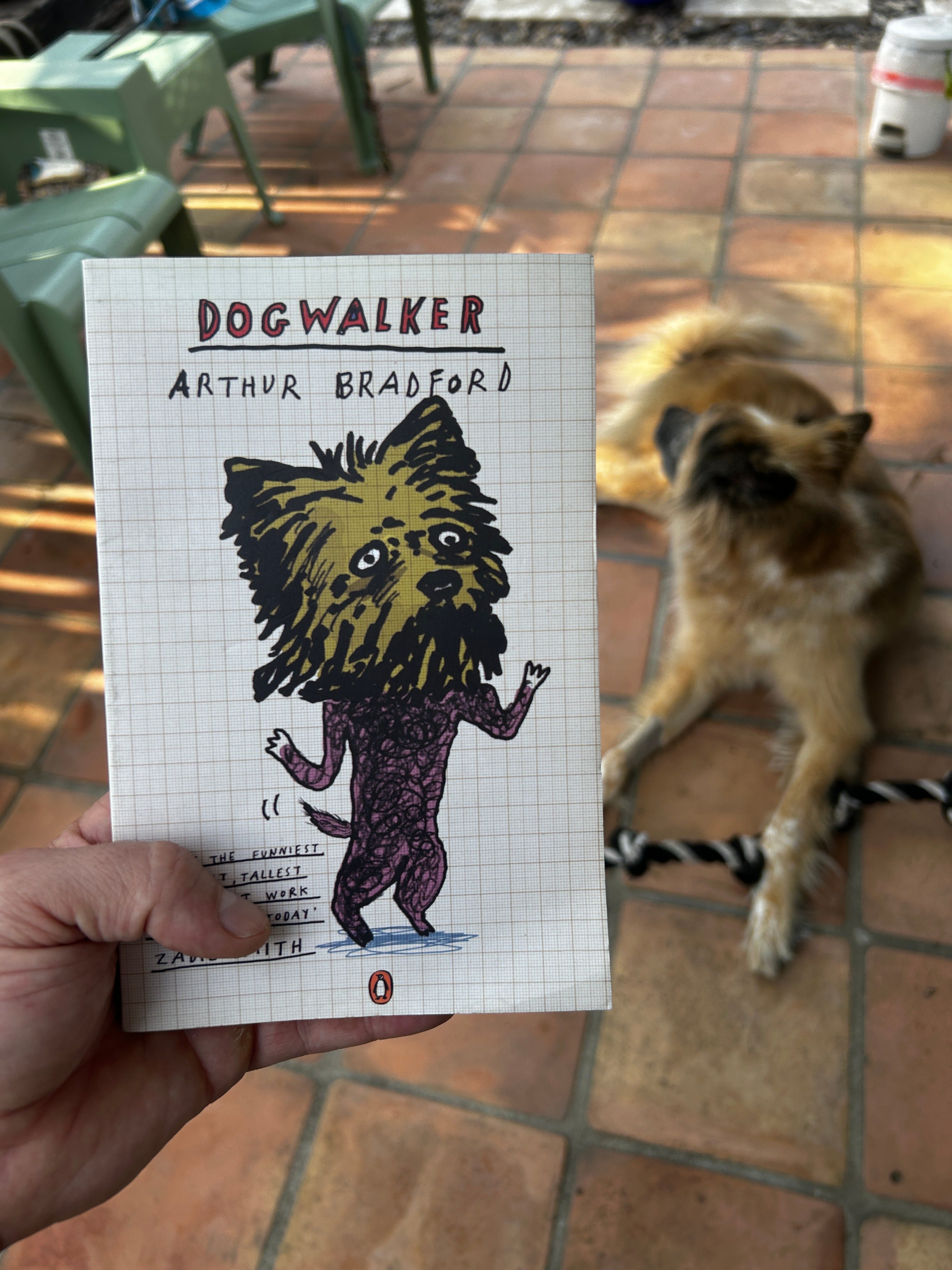
I like this book. Good feel to it. The cover has a distinctive weirdness that the US books omit and a blurb from Zadie Smith that I like to think has some story behind it (“One of the funniest, smartest, tallest writers at work in America today”).
At this point in my relationship to Dogwalker, I don’t as much read it as I do hang out with it. Which is very pleasant. This is partly due to how it’s written. It’s funny and casual, with a tone of “Oh yeah, that reminds me, lemme tell you…” The affable slacker persona is charming enough, I guess, but what Bradford does that I keep coming back to admire, is how he builds genuine pathos out of rampant absurdity, violence, and depravity. How many times have I read “Chainsaw Apple?” And yet I always forget it’s a love story.
Each reread, one story will stand out as my new favorite. This time it was “Little Rodney.” I just cannot overstate how delightfully voiced this horrific story is. What struck me this week was how carefully constructed it is, how meticulously crafted it feels on a sentence level. The story is unadorned. It moves lightly and quickly. As I started to list all the things that were working, I felt a little exposed, to be honest. This contrast of humor and humanity and sudden barbarity, all framed by a likeable loser—that’s kinda what I’m trying to do too in my fiction as well. Or at least part of what I’m trying to do, anyway. I doubt Arthur Bradford will ever read Hey You Assholes, but if he does, I hope he’s flattered by my thievery.
Earlier this year, I reread Bradford’s other short story collection, Turtleface & Beyond. It’s good too. Really good. It’s longer. The characters are more fully rendered. Entire conversations happen. The Denis Johnson influence is so strong it’s basically homage. You could definitely make the case that it’s better than Dogwalker. More mature, more polished. But I don’t know. I disagree, I think. For me, Dogwalker just got that thing. It swings. It works. It fucking rules.
Thanks Kyle! I enjoyed reading this quite a lot. I'll check out "Hey You Assholes" - good title.